On my garage floor, there is a 180-wheel-horsepower Honda Fit.
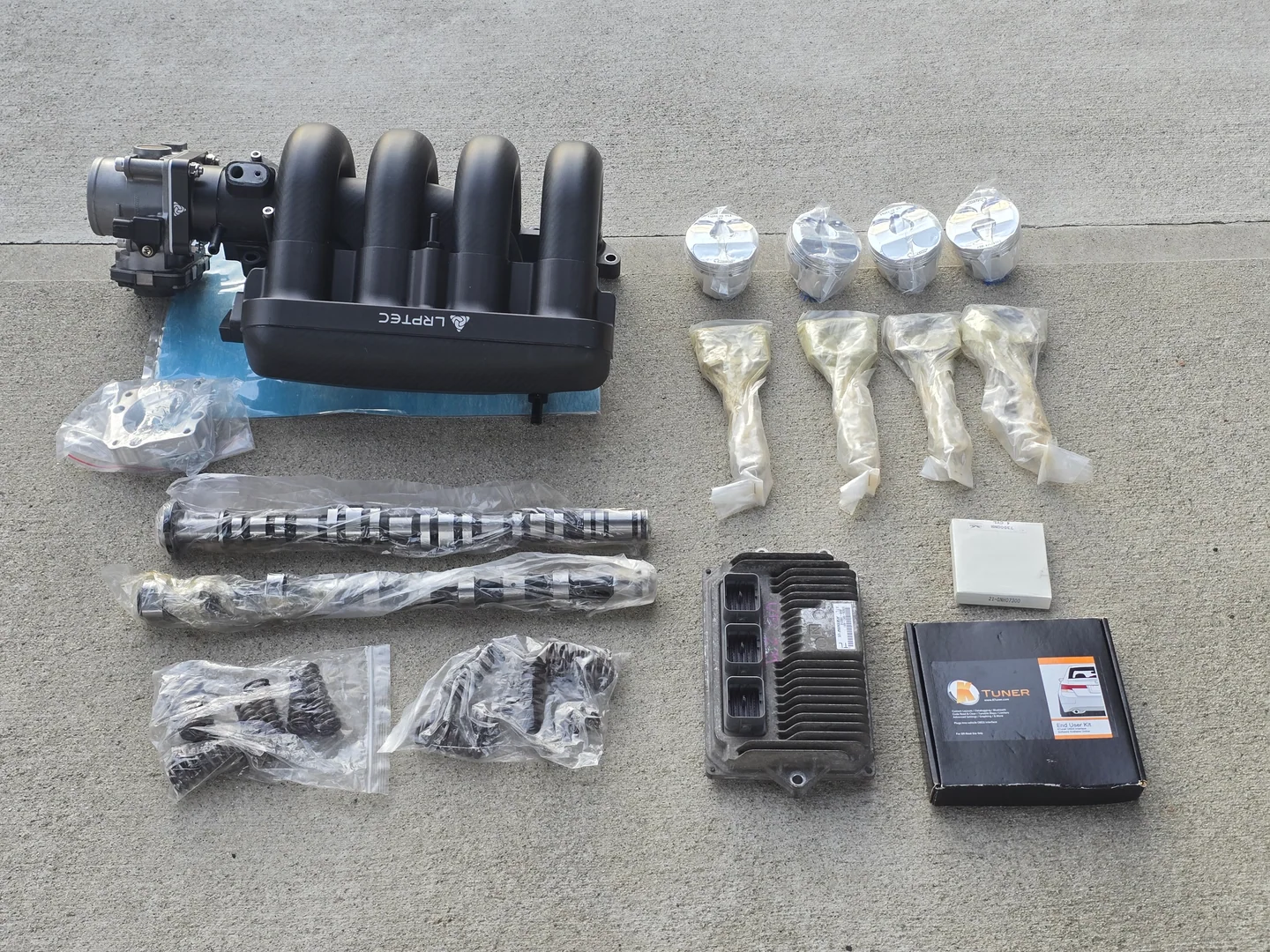
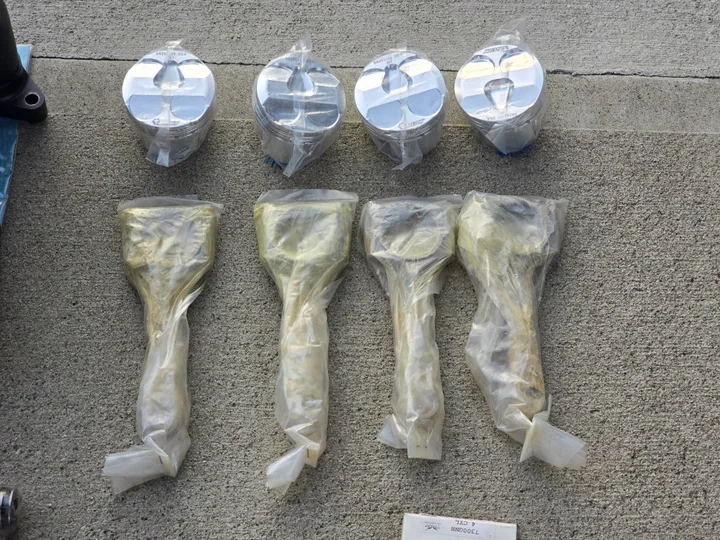
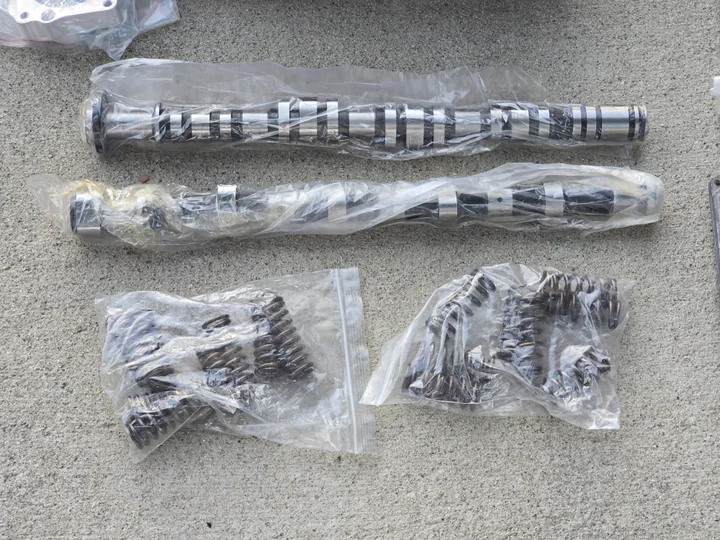
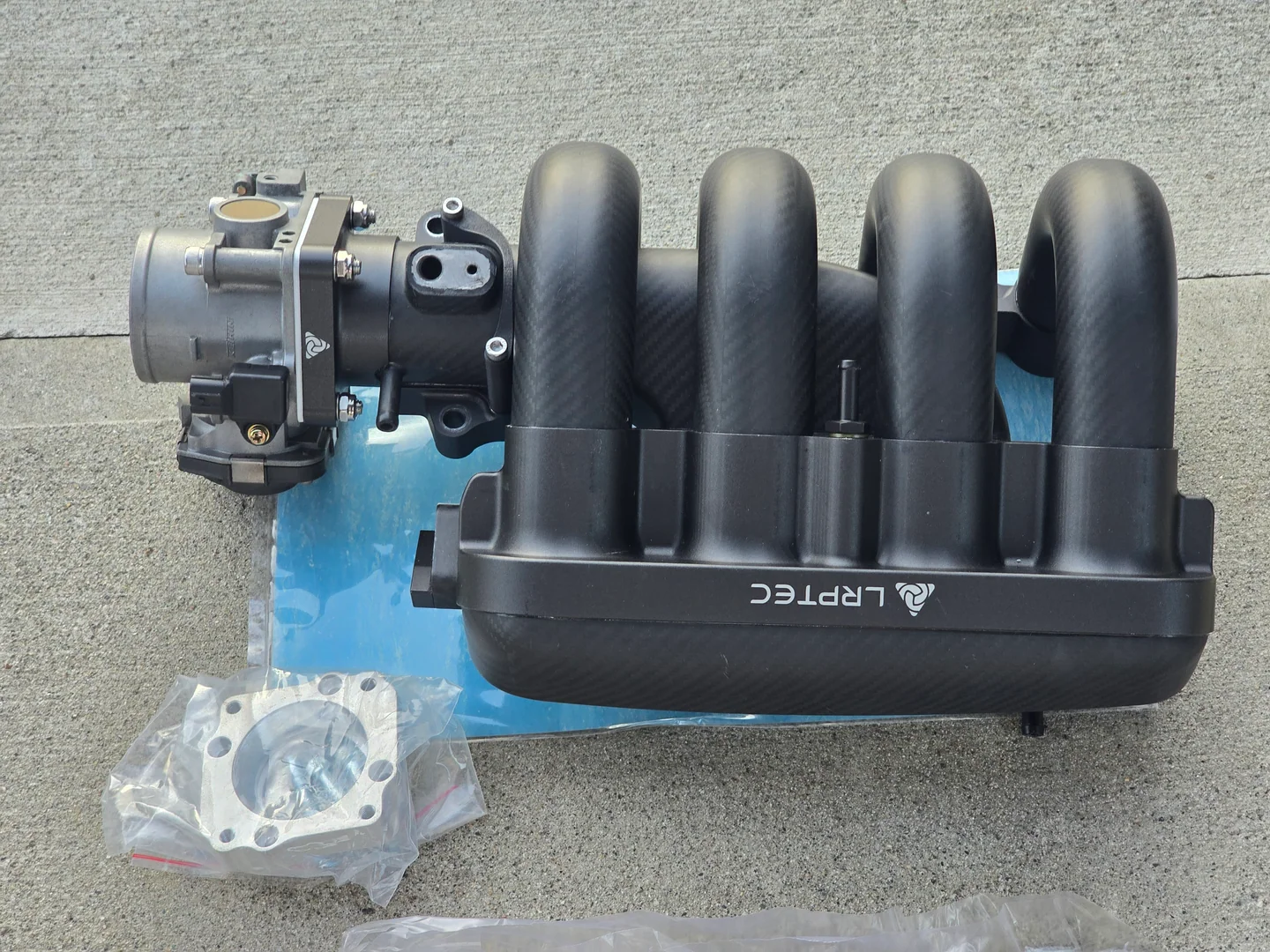
It is currently disassembled into potential: 12.5:1 forged pistons, forged rods, custom camshafts, valve springs, larger injectors, a carbon-fiber intake manifold, a 70 mm throttle body, and a KTuner. Most of it is still wrapped in plastic. The only missing part is the one I cannot bolt to the engine.
Software.
This is not my first unreasonable Fit
I already own three sports cars. That should make it easy to leave one practical car alone. It has had the opposite effect.
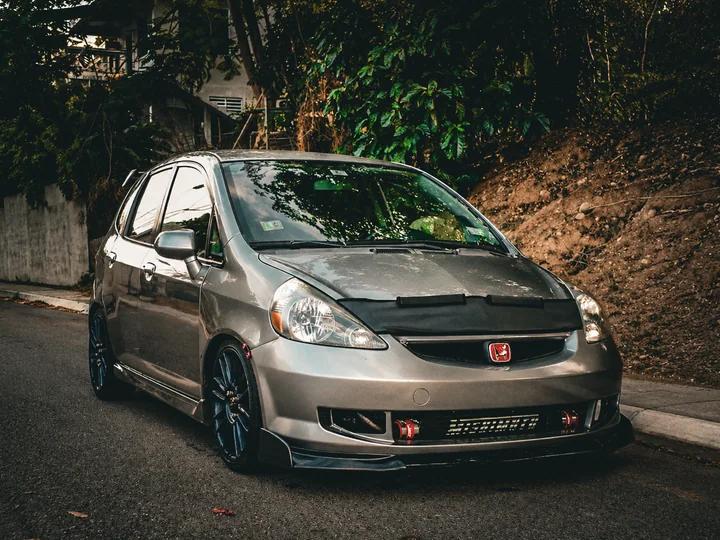
Back in Puerto Rico, I owned a GD3 Fit and turbocharged it. That car taught me what the Fit really is. It looks like transportation designed by a very responsible accountant, but it is light, spacious, predictable, and willing to be thrown around. You can carry a ridiculous amount of cargo on Saturday and embarrass more serious-looking cars on Sunday.
Now I have children. I need a car that can carry them, groceries, luggage, and the debris field that follows a family everywhere. Very little beats a Fit at that job. It is safe, easy to place on narrow Japanese roads, and absurdly spacious for its footprint. It is also lightweight and handles itself well on a track.
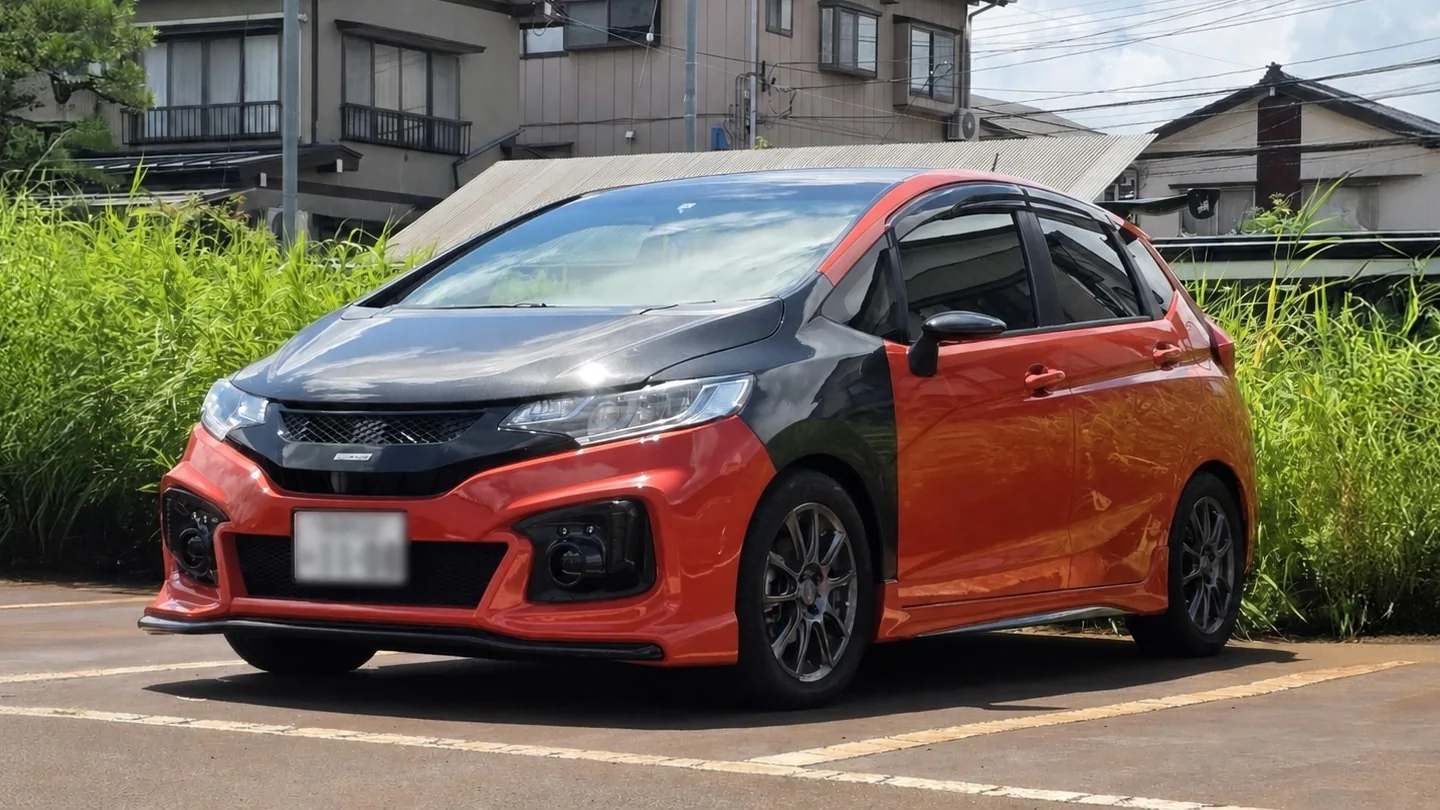
I drive this orange 2018 Fit RS every day. My S2000 Type S, Integra Type R, and Civic Type R spend most of their time in storage. I wrote before about why the least exotic Honda in my garage creates the most daily freedom. The problem is that I am a car guy. I will modify anything I own. If somebody hands me a van, I will eventually start researching suspension geometry.
The Fit never had a chance.
Why 180 whp—and no more
A stock GK5 Fit generally puts roughly 100 to 110 horsepower to the wheels. I want at least 180, naturally aspirated, on premium fuel.
That number is not a dyno fantasy selected because it looks good on a screen. It is strategic. The Japanese events I want to enter divide cars through combinations of power, weight, and modification level. Around 180 whp gives this light chassis an excellent power-to-weight ratio without pushing it into a class where the Fit would need far more money, fabrication, and compromise to remain competitive.
Anything significantly beyond that stops making sense for the classes I care about. More importantly, this is still my family car. I want the engine to feel alive, not to convert every school run or grocery trip into a systems test.
The recipe is aggressive but coherent: RZCrew 12.5:1 forged pistons, custom forged rods, custom camshafts and springs, 2018 Civic Si injectors, an LRPTech carbon-fiber intake manifold, a 70 mm throttle body, and supporting cooling and drivetrain work. The Civic Si injectors are attractive because both cars use versions of Honda’s L15 engine family, making the physical installation straightforward while providing more fuel capacity.
Eventually I would add a stronger clutch, an oil cooler, and an upgraded radiator. Mechanically, there is a path.
The parts cannot outrun the ECU
All the serious engine components are still sitting in boxes because this Fit is extremely sensitive to changes the factory ECU does not understand.
The intake manifold makes the problem obvious. The LRPTech manifold and larger throttle body physically fit, but without the correct calibration the engine surges continuously. That is with one major airflow change. Installing high-compression pistons, cams, springs, and larger injectors together without proper control would not be brave. It would be an expensive way to learn exactly how quickly forged parts can become abstract sculpture.
The car already has a J’s Racing T-REV system, Hasport engine mounts, Takeda intake, J’s Racing full titanium exhaust, Hybrid Racing short shifter, Yellow Speed Racing rear big-brake kit, Mugen suspension and 17-inch wheels, a Mugen body kit, carbon hood, carbon roof, carbon trunk, and a carbon GT wing.
The project has passed $15,000 in total—not only for the engine parts waiting on the floor, but across the entire car so far. The chassis, brakes, exhaust, appearance, and driving position have all moved forward. The engine is where progress met a password prompt.
The strange tuning gap in Japan
The frustrating part is that this is a Japanese car in Japan.
I expected the domestic tuning ecosystem to be deeper than the American one. For this generation of Fit, I found the opposite. Many Japanese enthusiasts install a few bolt-ons, concentrate on suspension and braking, and leave power close to stock. There is nothing wrong with that approach—the Fit responds brilliantly to chassis work—but it means there is less demand for flexible, owner-accessible ECU tuning.
Japan’s inspection system also requires cars to continue meeting safety and pollution standards. In my experience, that pushes the market toward conservative packages that a shop already knows it can support. Companies such as J’s Racing offer in-house reflashes. What is missing is the broad ecosystem Americans take for granted: buy a device, connect a laptop, work with a remote tuner, and revise the calibration as the build evolves.
You can buy Japanese hardware for almost every part of the car. When it comes time to tell the Japanese computer what the Japanese hardware is doing, everybody suddenly becomes very busy.
KTuner: please notice this very polite Fit
KTuner publicly lists the 2015–2020 Fit as a supported application. That does not mean every ECU fitted to every regional version of the car is supported. The software needs definitions for a specific ECU family and calibration strategy.
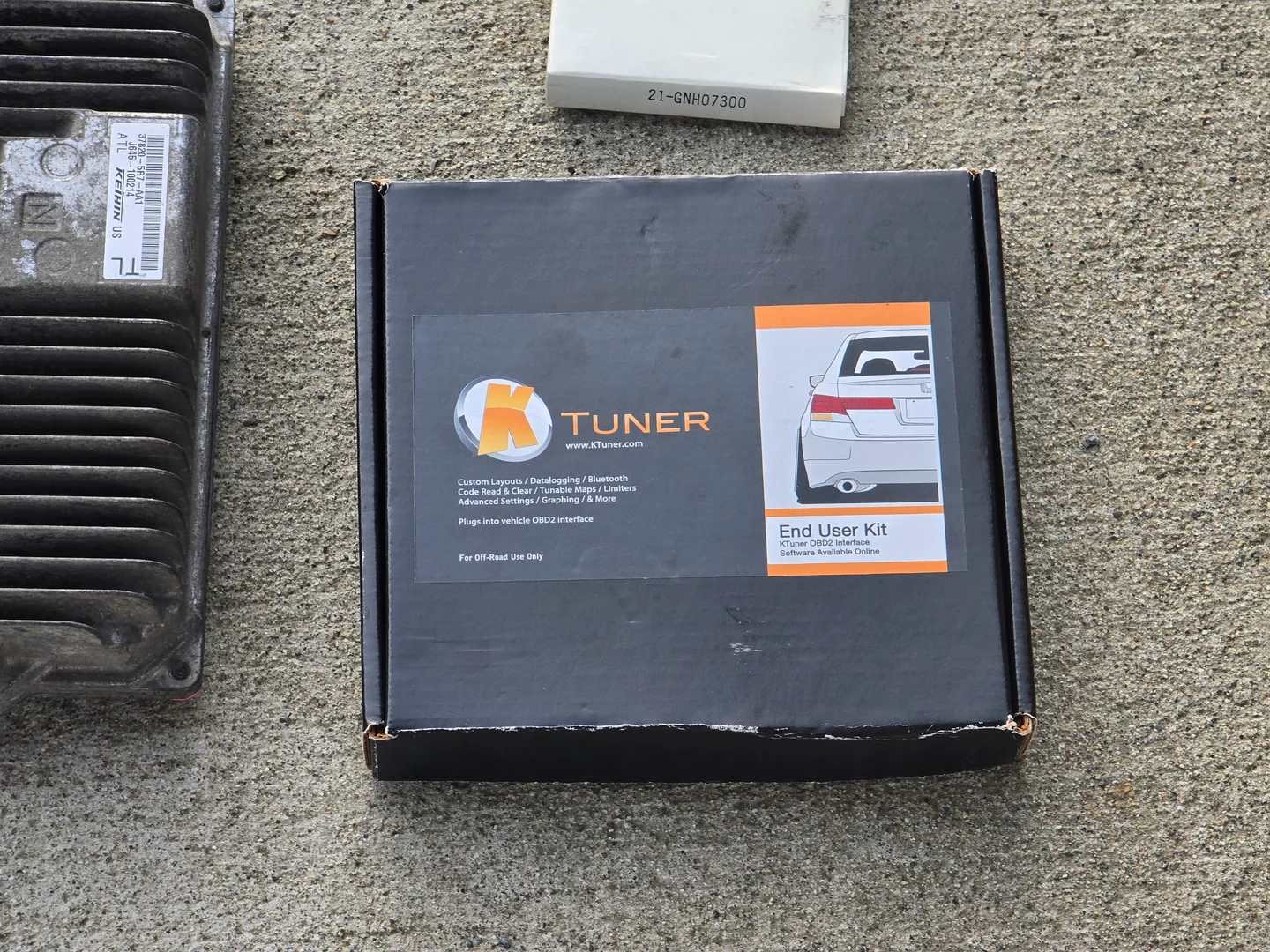
My Japanese-market ECU belongs to a different family from the supported units. KTuner initially told me it did not have data for that series. I offered ECU hardware. Eventually, they said a KTuner unit could read the ECU remotely, so I bought one, connected it to the car, and uploaded the Japanese ECU data.
They were careful: reviewing the data did not guarantee support, the work was not easy, and it would take time.
That was fair. I waited.
I also found a UK-market ECU whose part-number family appears in KTuner’s supported strategies. The photographed unit is that UK ECU; the data I uploaded was from the Japanese ECU already in the car. They were two separate attempts to solve the same problem.
The UK unit created its own small comedy. The software’s “Unlock Unit from ECU” option appeared greyed out. After restarting the program a few times, I discovered there was a short window—roughly thirty seconds—when the button could be clicked before it became unavailable again. I unlocked it. That solved the button, not the Japanese ECU support.
Months after sending the data, I followed up. The project was still in the queue.
I do not think KTuner owes me a deadline or a custom engineering project. I understand why supporting an unfamiliar ECU carries risk. But somewhere between “Fit 15–20” on an application list and my Fit refusing to be tuned lives a very expensive pile of context.
The solutions that are not really solutions
I contacted J’s Racing. Their reflash can support a more conventional combination, but not everything in this engine plan. Their position was that the factory ECU could not handle all the data required by so many changes.
I disagree with that explanation. I suspect the real limitation is risk: they have a package they know, and my combination moves too far outside it. That is a perfectly reasonable business boundary. It is still a wall from my side.
The other answer is MoTeC. Its M1 direct-injection hardware can control modern high-pressure injectors, and this is the type of system used in serious race cars. It is also not a magic box that plugs into my Fit and politely preserves everything Honda built around the factory ECU.
MoTeC’s own general-purpose direct-injection documentation says it does not include the original CAN messaging for systems such as power steering, ABS, starting, and dashboards. On my car, the realistic installation would work alongside the factory computer, require custom wiring and specialist support, and likely cost thousands before tuning. The factory cluster and everyday features become a project of their own.
For a dedicated race car, that compromise can be correct. For the car I use for literally everything, it is a pain in the ass disguised as a solution.
A build can end before it begins
If KTuner adds support, I will build the engine, add the clutch and cooling, tune it on premium fuel, and find out whether 180 whp was ambitious, realistic, or both.
If support never arrives, I will probably abandon the full engine combination and use a regular J’s Racing reflash next year. The car will remain useful, quick enough to enjoy, and far less powerful than the parts on my garage floor suggest.
That outcome would be disappointing, but not catastrophic. The Fit already handles better, stops harder, shifts better, sounds better, and makes daily driving more interesting. It is still the family car I wanted. The mistake would be ruining all of that simply because I refuse to accept a software boundary.
Car projects are usually described as stories of completion: parts installed, engine started, dyno graph posted. This one may be a story about stopping. The forged parts may stay in their boxes. The 180-whp Fit may remain a car that exists only in measurements, receipts, and my head.
I can live with that.
I will still modify the next car, though. Even if it is a van.