There were two endurance races at Fuji Speedway that weekend.
The official one lasted three hours and involved professional drivers, two mandatory refueling stops, and forty-three race cars trying to occupy the same pieces of asphalt. The unofficial one involved my wife, our youngest son, a Honda Fit, Golden Week traffic, questionable food, and more than ¥200,000 leaving my bank account with impressive aerodynamic efficiency.
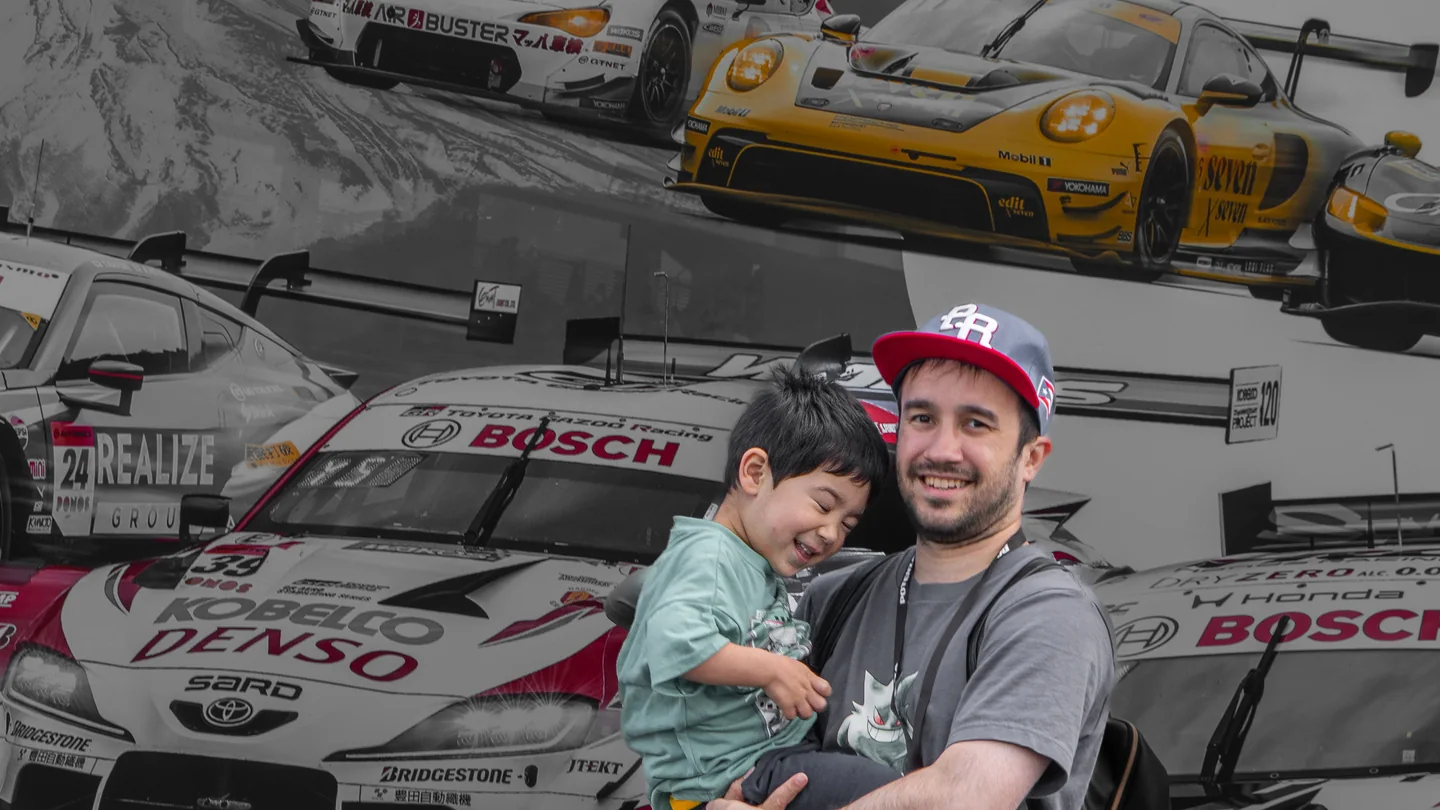
I wanted this to be a family trip. I am a Honda fan, a motorsport fan, and a father who would very much like his son to inherit at least one of my expensive interests. So on May 3 and 4, 2026, we went to Fuji Speedway for Round 2 of SUPER GT: the FUJI GT 3Hours RACE GW SPECIAL.
The six-hour formation lap
We left Nagaoka in my Honda Fit. Of the four Hondas I own, the Fit is the one that actually performs the difficult task of carrying people and their belongings somewhere. I have written before about why the least exotic Honda in my garage creates the most daily freedom. On this trip, that freedom meant six hours through Gunma toward Shizuoka with a small child in the back.
We tried to visit the famous outlets in Shizuoka. “Tried” is the important word. Golden Week had converted the entrance into a stationary automotive exhibition, except none of the cars were interesting and everybody wanted to leave. We could not even get in.
Our accommodation was a villa in the mountains of Minami Hakone. The location was beautiful. The price suggested luxury. The maintenance suggested that the mountain had recently won a territorial dispute against the building.
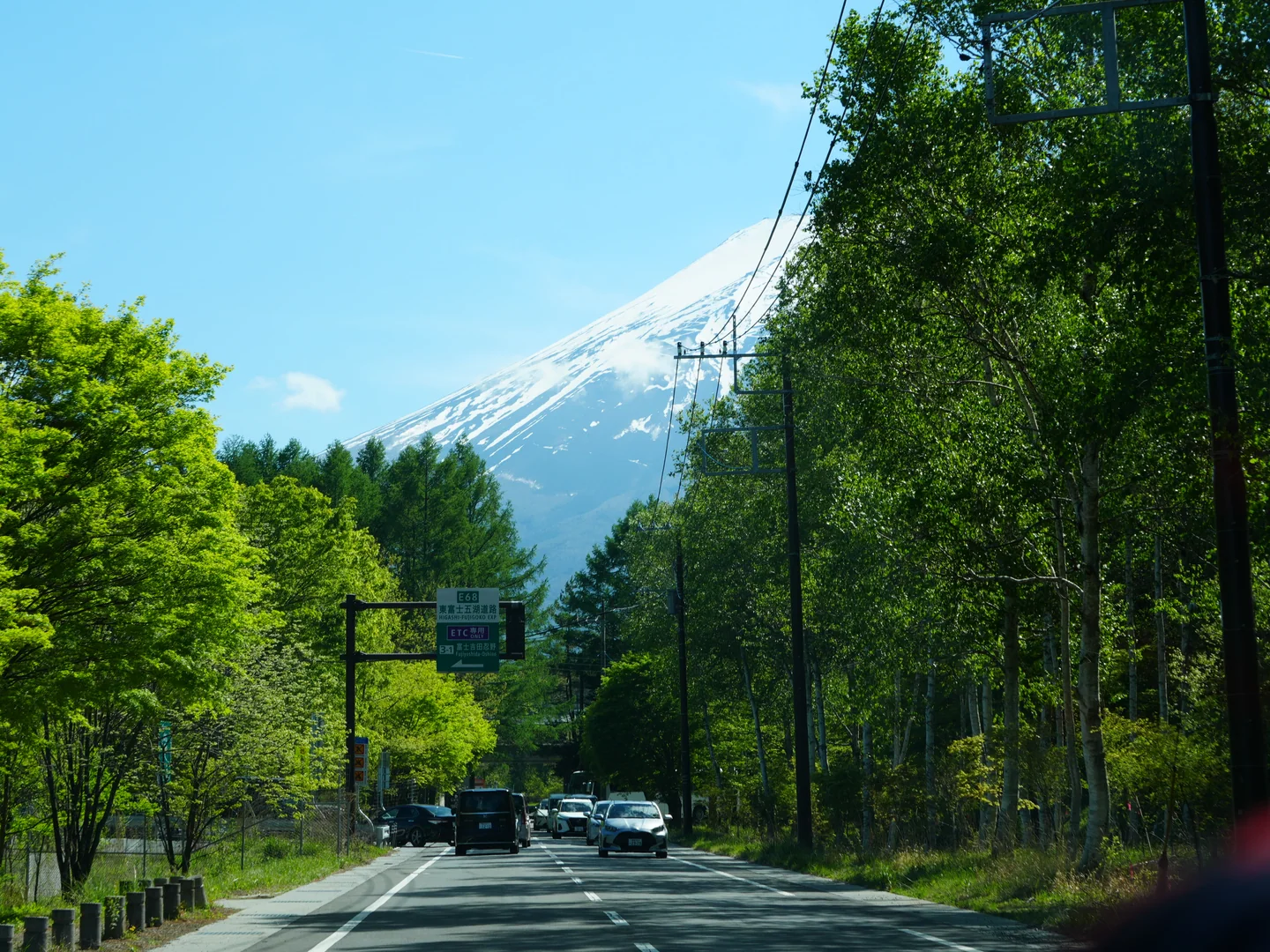
Still, the road into Shizuoka kept revealing Mount Fuji between buildings and trees. It felt like the landscape was advertising the weekend before we reached the circuit.
A family trip disguised as a race weekend
I had attended motorsport events before, and I used to race at a semi-professional level. This was my first SUPER GT weekend with my family.
My wife did not know what was happening. This did not prevent her from asking increasingly specific questions about aerodynamics, engineering, driver changes, tires, and why one car could pass another car that appeared to be doing the same thing.
Every so often she summarized her position:
「よく分からないけど、やっぱりめっちゃかっこいい。」
“I do not really understand it, but it is seriously so cool.”
That may be the most accurate beginner’s guide to SUPER GT ever written.
Our son needed less explanation. He liked the loudest GT300 cars. At several points he also wanted to enter the circuit while the race was still happening. I appreciated the ambition but felt his racing debut needed slightly more preparation and considerably fewer active GT500 cars.
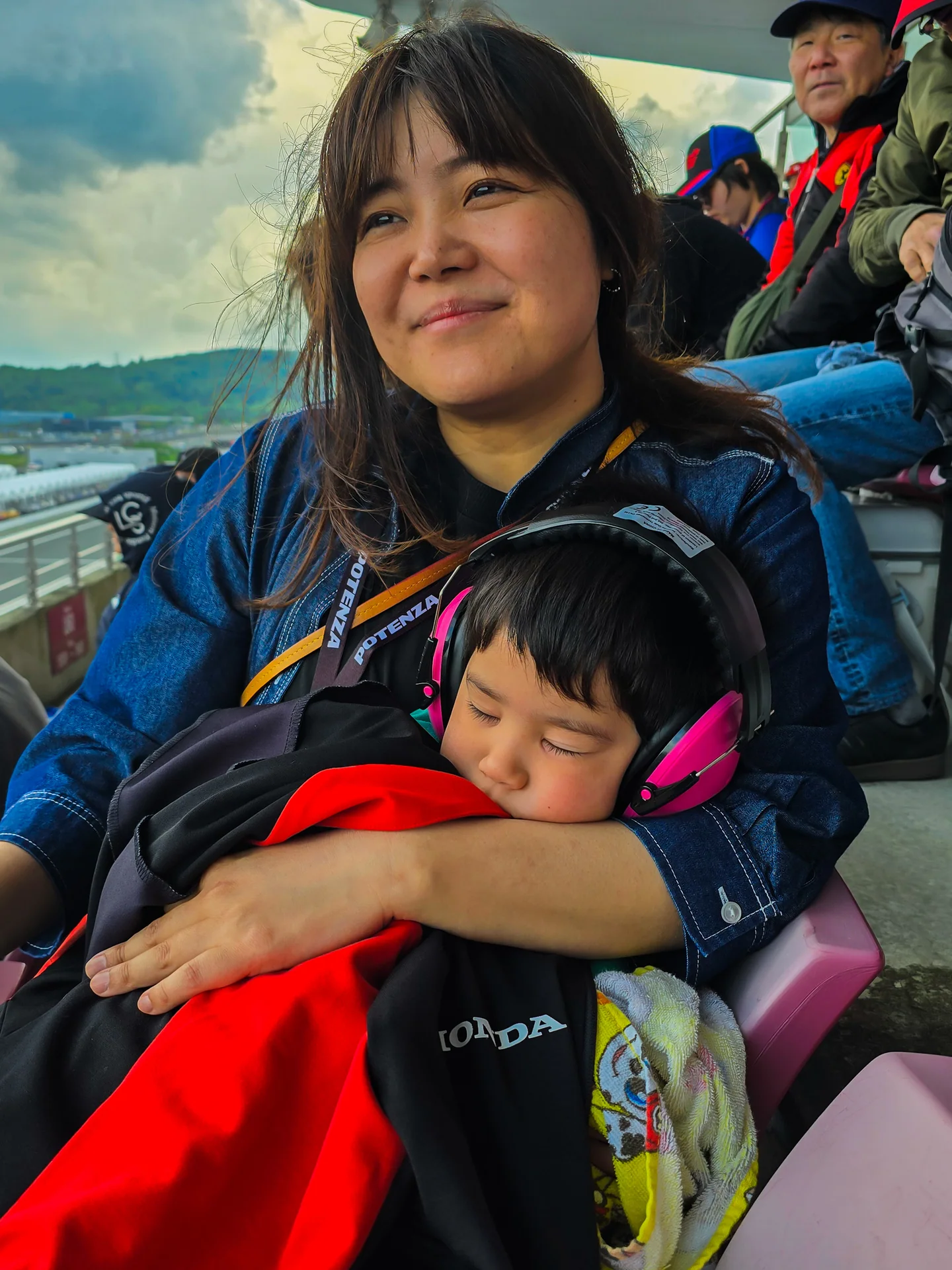
During qualifying, it was cold and windy. My wife held him in the grandstand with hearing protection over his ears. On race day, the acoustics around our seats made every engine feel physical. He slept for about an hour anyway.
Children are incredible. I cannot sleep if a neighbor closes a cabinet incorrectly. He slept through SUPER GT.
The Prelude identity crisis
Honda replaced the Civic Type R-GT with the Prelude-GT for the 2026 GT500 season. I was not excited about the new road-going Prelude. It is expensive, and I do not particularly like the shape. From some angles it looks like a Nissan Z wandered into a Honda dealership and refused to leave.
That felt mildly blasphemous coming from Honda.
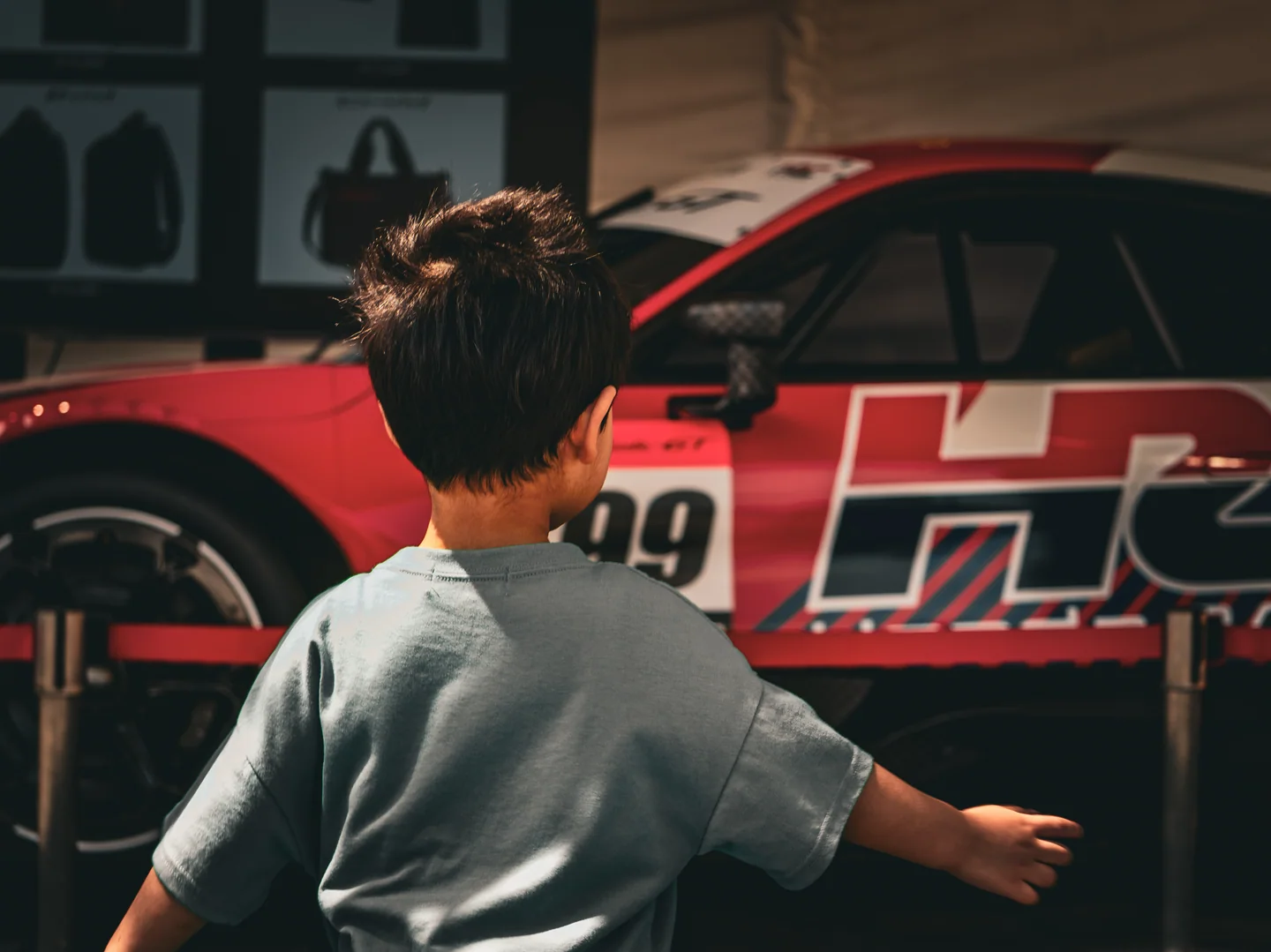
Then I saw the No. 99 Honda HRC Prelude-GT development car in person. Race-car proportions have a way of correcting design arguments with width, aero, and violence. I still did not fall in love with the road car, but I understood the racing version much better. Watching the Prelude-GTs compete made me respect how much Honda had extracted from the shape.
Our son required none of this internal debate. It was a race car. Race cars are good. His review was complete.
GT300 is where engineering gets weird
GT500 is brutally fast. The cars are purpose-built silhouettes from Toyota, Honda, and Nissan, and watching them carve through slower traffic is one of the best parts of the event. But GT300 is the class that holds my attention.
The field contains different layouts, engines, chassis philosophies, tire choices, and regulatory origins. A Nissan GT-R can fight a Mercedes-AMG, a Lexus, a Porsche, a Ferrari, a Subaru, and machines built specifically around Japanese GT300 rules. Engineers are not solving one shared problem with nearly identical tools. They are trying to make fundamentally different cars arrive at the same lap time.
That makes traffic part of the race. The GT500 leaders repeatedly catch the GT300 field, and every pass becomes a small negotiation between two separate competitions. The faster car must lose as little time as possible. The GT300 driver cannot throw away a class battle just because something with more downforce has appeared in the mirrors.
Those mixed-class passes were my favorite part of the racing. They looked effortless until you remembered that both drivers were operating close to the limit while calculating the intentions of somebody approaching at a deeply antisocial speed.
I left for food and the leader changed
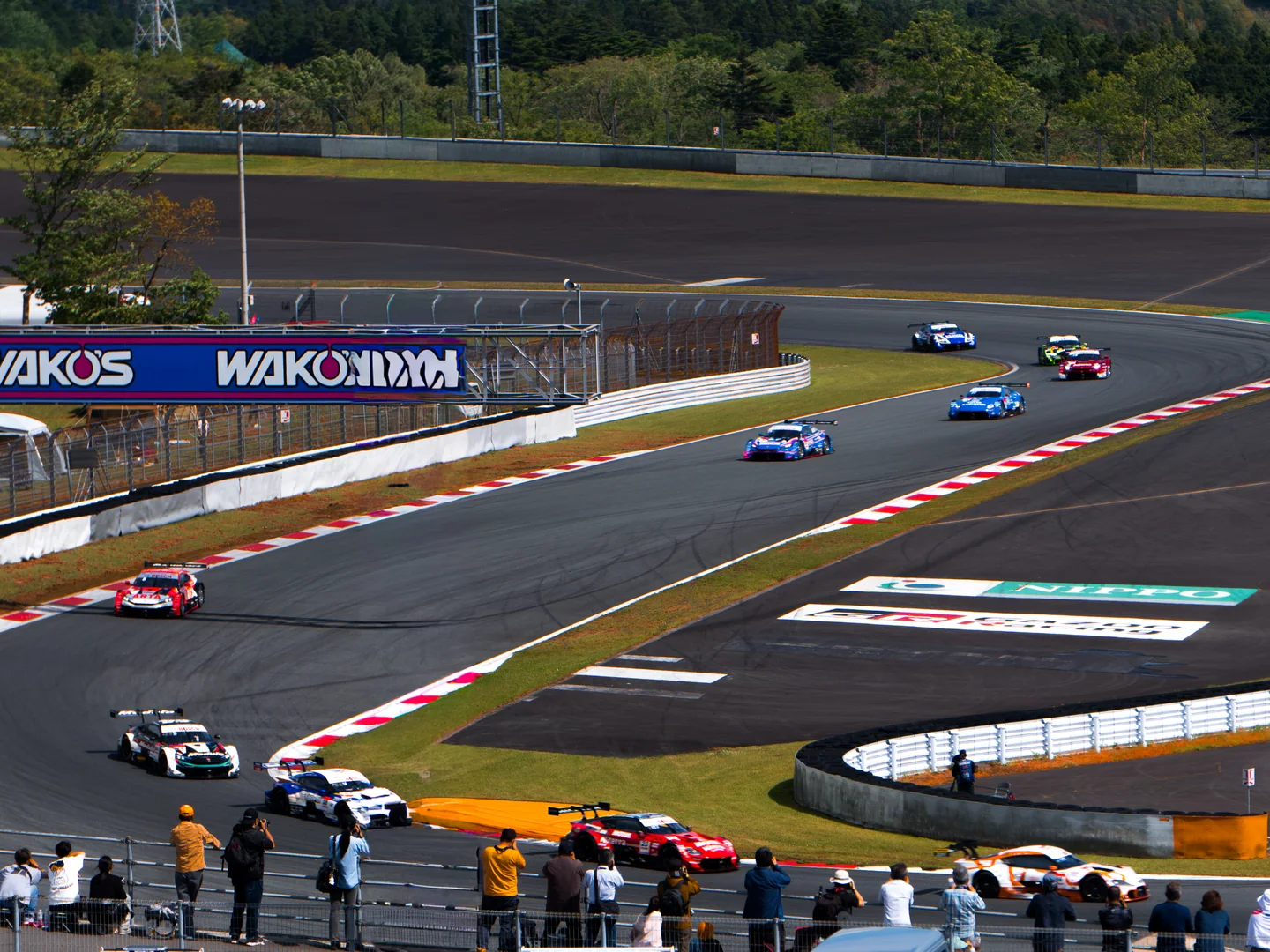
The No. 14 ENEOS X PRIME GR Supra started from pole and built a lead of more than twenty seconds. The No. 36 au TOM’S GR Supra initially appeared to be struggling. I watched the strategy develop, understood the required stops and driver changes, and then committed the classic spectator error of believing the race would remain considerate while I went to eat.
When I came back, the order had reversed.
No. 36 had recovered through pace and pit strategy. Sho Tsuboi and Kenta Yamashita eventually completed 115 laps and won their second consecutive race of the season. Motorsport rewards preparation, execution, and refusing to wait for Harry to return with disappointing tacos.
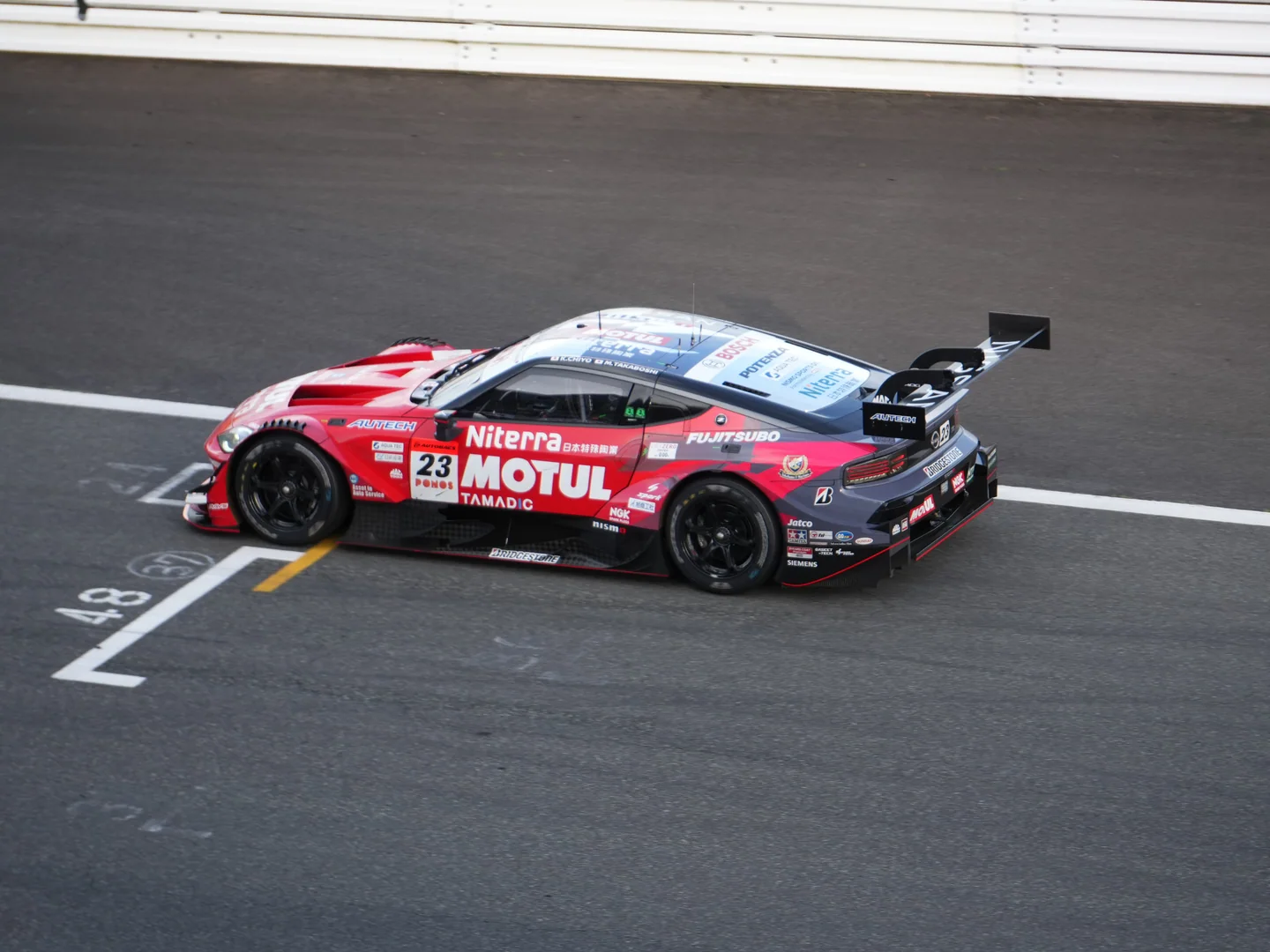
I was supporting ARTA MUGEN first. If neither ARTA car could win, I wanted the red No. 23 MOTUL Niterra Z. I saw the No. 38 KeePer CERUMO GR Supra make contact with it but could not tell exactly what had happened from our seats. Officials later gave No. 38 a drive-through penalty. No. 23 recovered to finish third, which was at least enough to put the Z on the podium.
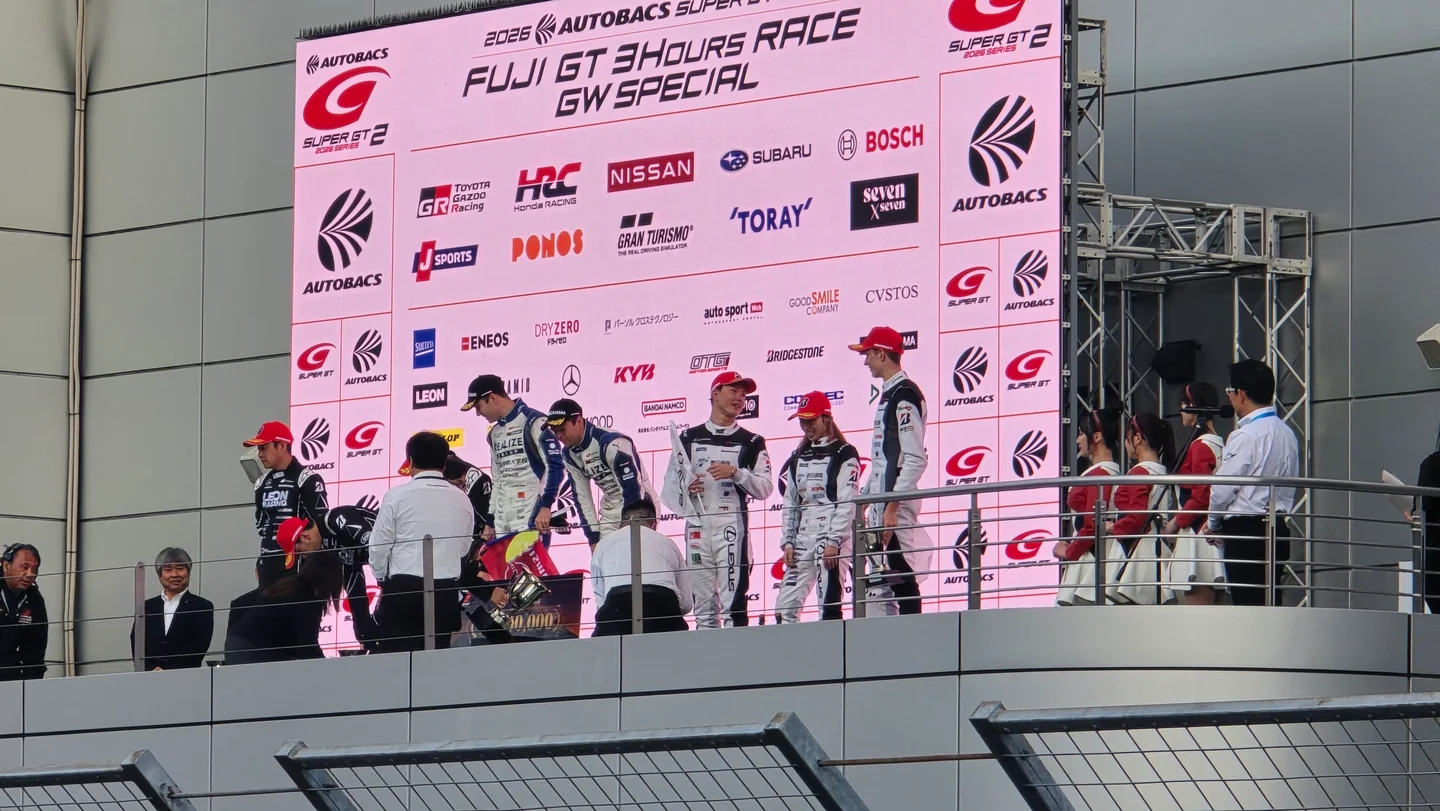
In GT300, I had supported the No. 56 REALIZE NISSAN MECHANIC CHALLENGE GT-R from the beginning. It started sixth and worked forward after the pole-sitting No. 61 Subaru suffered tire trouble. I missed part of that development from the grandstand, but I did not miss the result: João Paulo de Oliveira and Iori Kimura gave the GT-R its first class win since Fuji in 2023.
Fuji Round 2 podiums
GT500
- #36 au TOM’S GR SupraSho Tsuboi · Kenta Yamashita
- #14 ENEOS X PRIME GR SupraNirei Fukuzumi · Kazuya Oshima
- #23 MOTUL Niterra ZKatsumasa Chiyo · Mitsunori Takaboshi
GT300
- #56 REALIZE NISSAN MECHANIC CHALLENGE GT-RJoão Paulo de Oliveira · Iori Kimura
- #65 LEON PYRAMID AMGNaoya Gamou · Togo Suganami · Haruki Kurosawa
- #31 apr LC500h GTKazuto Kotaka · Miki Koyama · Charlie Wurz
Penalty: No. 38 received a drive-through after contacting No. 23 at the final corner on lap 14.
The ¥200,000 pit stop
The weekend cost more than ¥200,000 once we combined tickets, pit-walk access, lodging, fuel, tolls, food, and the merchandise operation I conducted with no meaningful adult supervision.
I bought a GR Supra shirt, an HRC cap, an HRC jacket, a MUGEN cup, and a Goodsmile Racing Miku jacket. Our son received a model car. I left with enough branded material to look like several competing sponsorship agreements had gone wrong.
The circuit food did not provide similar value.
I had a smoothie that tasted like nothing. The coffee tasted like water that had once heard a description of coffee. The yakisoba was oily and somehow missing umami, which in Japan should require a formal investigation. The taco meat was drier than my ex’s heart.
At least the race remained excellent.
After the checkered flag
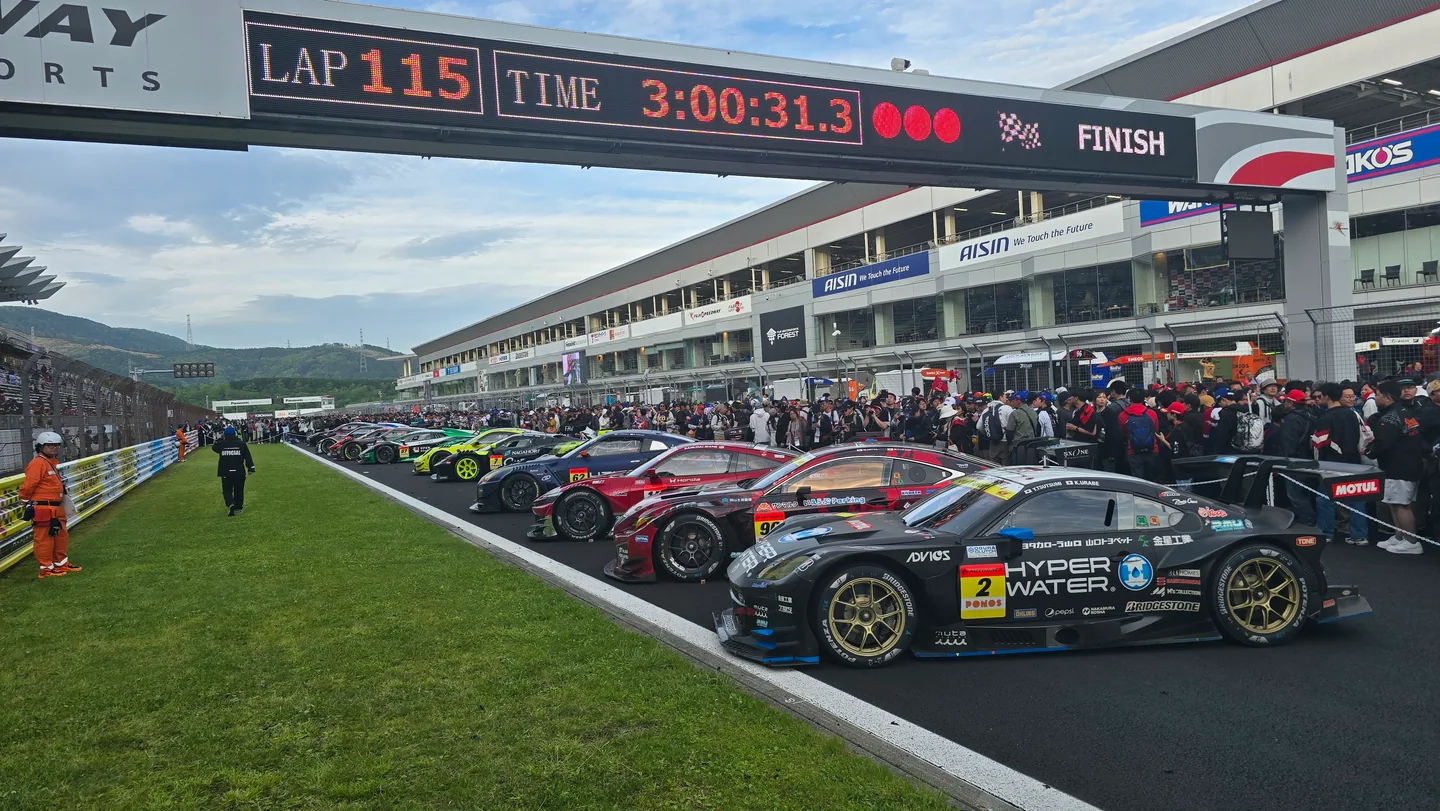
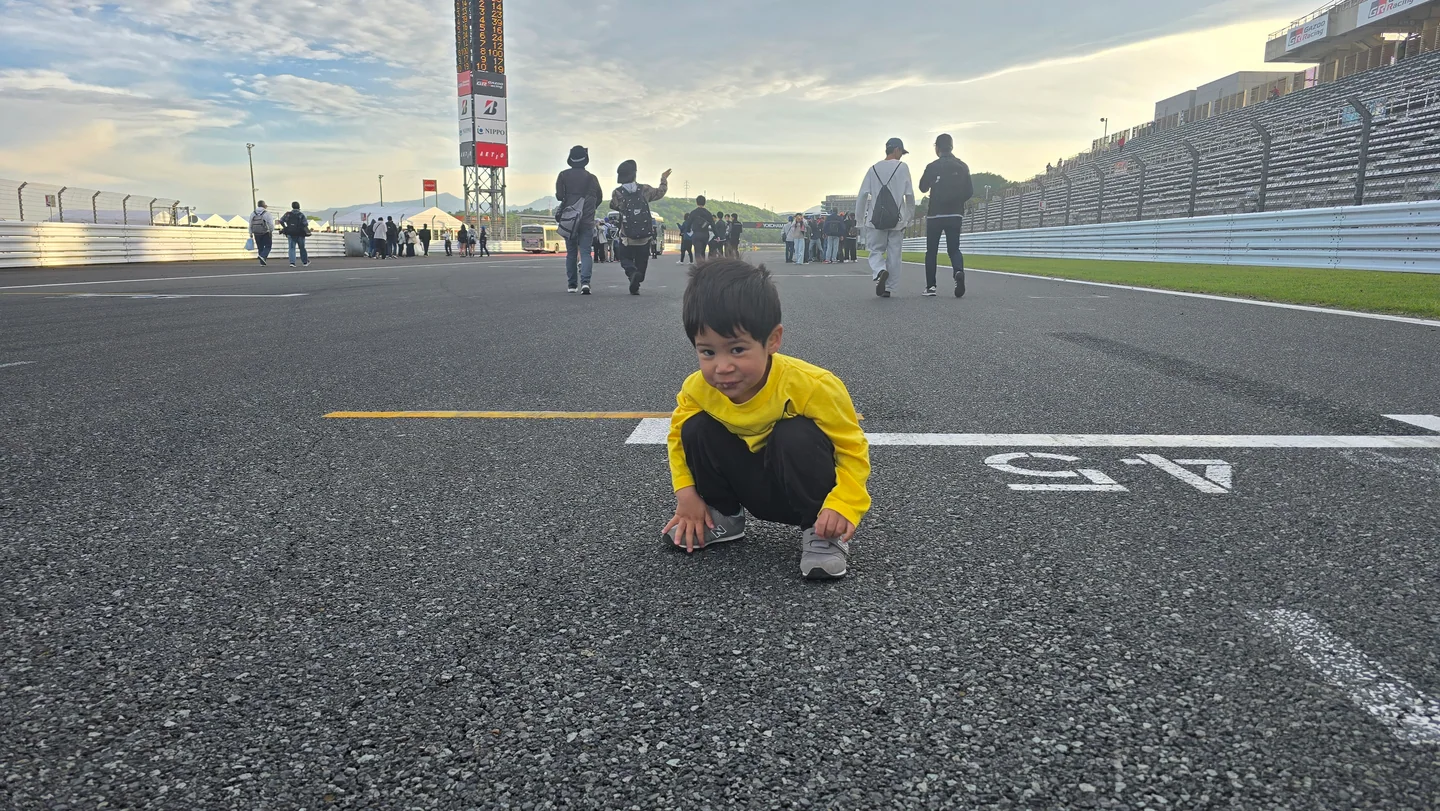
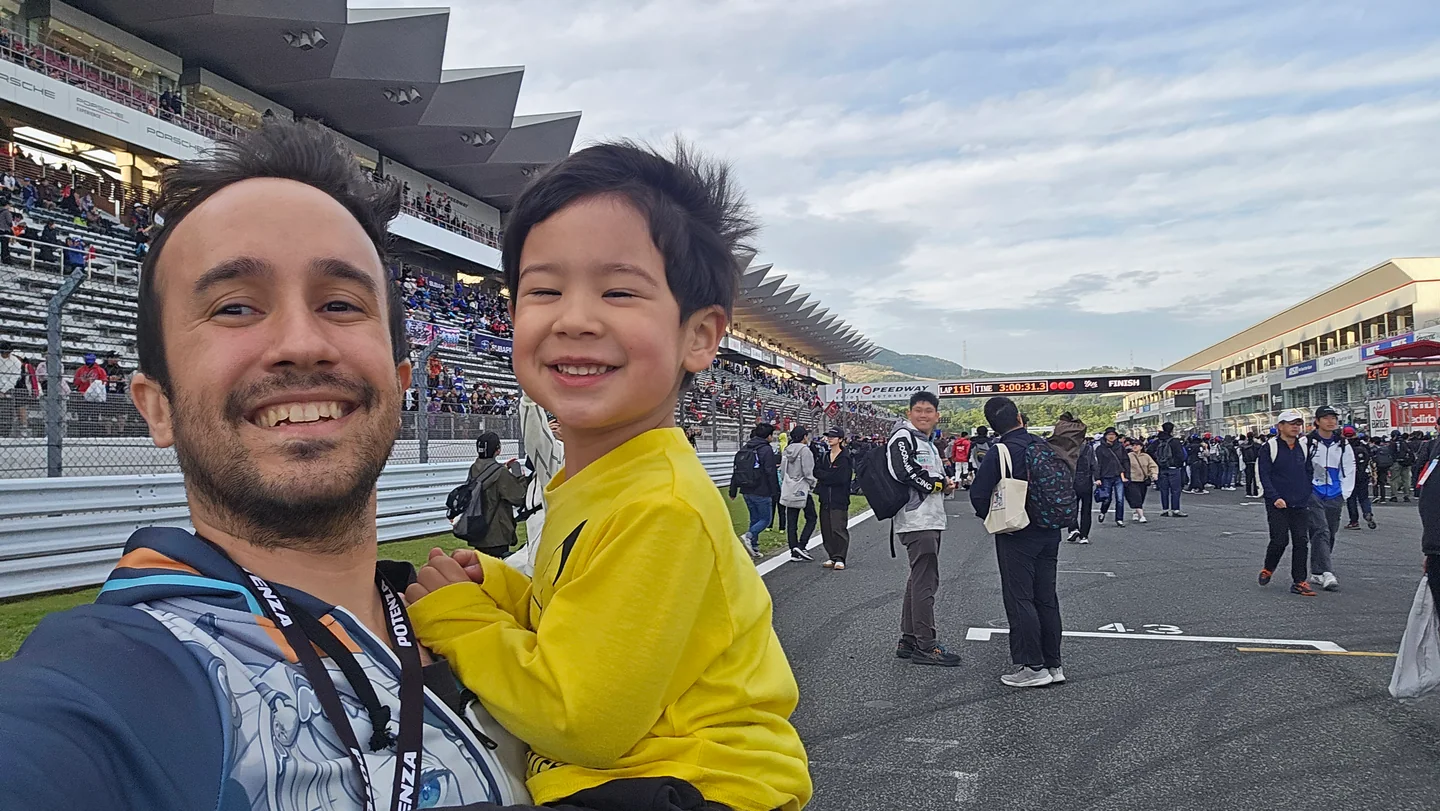
Once the race ended, everyone could walk onto the track. Our son finally received the access he had been requesting while cars were still using it.
He knew where he was. He crouched on the start-finish straight, studied the markings, and wanted to see the cars again. The scale of the circuit changes when you stand on it. From the grandstand, the straight looks wide. From the asphalt, it feels like a public road designed by someone expecting aircraft.
This was the moment the trip stopped being only my attempt to show my family something I loved. It had become one of their memories too.
The ten-hour cooldown lap
The drive home took ten hours. We went through Nagoya, a sentence that should not naturally conclude a trip from Shizuoka to Niigata but accurately describes the kind of decisions produced by Golden Week traffic.
My wife and son looked completely exhausted. They also had the unmistakable faces of people who had just experienced one of the best days of their lives. That expression made the traffic, cost, bad food, neglected villa, and logistics feel smaller.
My wife understood why I like cars so much. My son discovered that the loudest ones are often the best ones. I watched a GT500 lead disappear while eating a terrible taco and still came home satisfied.
The weekend also did something more dangerous: it made me want to race again.
I have spent a great deal of time thinking about how far to take my Honda Fit as a daily-driven project. Fuji reminded me that cars are not only objects to own, modify, or watch. The deepest satisfaction comes from participating—from understanding the machine, making decisions under pressure, and finding the limit yourself.
I want to return to SUPER GT with my family.
I also want to return to a circuit wearing a helmet.